
For people who already buy kombucha
You paid for the living culture. They killed it before it left the warehouse.
I drank kombucha every day for the living cultures. That was the whole point. Then I found out what the industry did to the product in 2010. Pasteurized. Force-carbonated. Sold back to me dead at five dollars a bottle. Over $1,100 a year on sweetened tea with nothing alive inside.
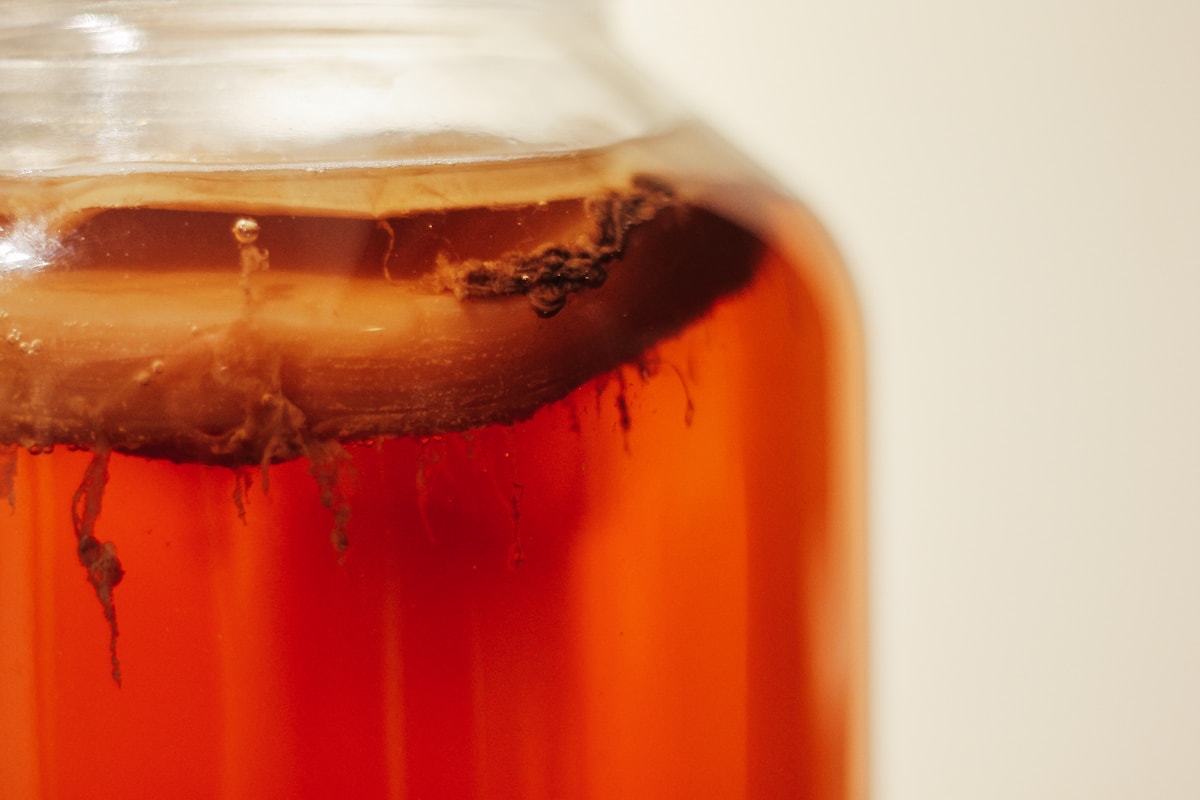
- Yours has a living culture. Theirs does not
- About twenty cents a bottle
- First batch in seven days
- $67 once, nothing ships
I drank kombucha every single day and never once questioned what was in the bottle.
I trusted the label. It said raw. It said live cultures. I was buying it for what was alive inside, because that was the whole point. A living culture eats sugar, makes acid, makes carbonation, and fills the bottle with bacteria and yeast that nothing else on the shelf carries.
That is what I was paying for. The living part.
Then I found out they pulled it off the shelves. All of it. Nationwide. In 2010. And once I read why, it made total sense: a living culture does not stop fermenting because you put a cap on the bottle. It keeps eating. It keeps making alcohol. Of course they pulled it.
What I did not expect was what they put back.
Pasteurized. Force-carbonated. The culture that made it kombucha was dead before it left the warehouse. And the price did not move.
Once I realized that, the economics hit different. About five dollars a bottle. Buy a few a week and you are over a thousand dollars a year. On what? If the living culture is gone, I am buying sweetened tea with bubbles pumped in. I could buy an Arnold Palmer for a dollar if that is what I wanted. But I am not going to pay five dollars for an imitation of the thing I was actually after.
The betrayal came first. The math came second. And the math only mattered because the product was already dead.
To be honest with you, it pissed me off. Which is sort of why I built this course. I want to take things that are relatively super simple and teach people how to do them, so they can stop getting ripped off too. I do not mind paying for things. But the value has to be there. And once the living culture is gone, the value is gone.
Let me tell you exactly what happened in 2010, because it is the reason the bottle in your hand tastes different from the one your friend made in her kitchen.
In 2010, Whole Foods pulled every bottle of kombucha off every shelf in the country.
A Consumer Protection Inspector in Portland, Maine named Randy Trahan noticed leaking bottles during a routine audit. He sent samples to the University of Maine food sciences lab. They came back testing between 0.5% and 3% alcohol.
On June 15, 2010, Whole Foods voluntarily removed all kombucha products nationwide. More than a dozen suppliers recalled. The Treasury Department issued a formal warning. Industry press had been calling this a "ticking time bomb" for years. The bomb went off.
Here is the problem, and it is worth understanding because it explains everything about the price tag you pay at the store.
Kombucha is alive. The culture in the bottle keeps eating sugar, keeps producing alcohol, keeps fermenting. That is what makes it kombucha. A living culture does not stop living because you put a cap on the bottle and stuck a price sticker on it.
The industry needed a fix. Living kombucha on a shelf in July, shipped across the country in a truck, sitting in a warehouse, could not be kept reliably under 0.5% alcohol. That is the federal line. Cross it and the bottle is a regulated alcoholic beverage, with permits, excise taxes, and a health warning statement.
Their fix was to kill the culture.
Pasteurize it. Force-carbonate it. Add selected strains back in after the kill, the way you would put a fish back in a pond after draining the water. The label still says kombucha. The shelf price stayed the same. The thing that made it kombucha is gone.
Some brands fought hard to keep it raw. GT Dave reformulated his product into an "Enlightened" line that stayed under the alcohol threshold by adjusting the culture ratio. Consumer backlash was significant. Many found the new version weaker. He later launched a "Classic" line sold as an alcoholic beverage, over twenty-one only.
But most of the category took the easier path. Kill the culture. Carbonate it with a machine. Print "live cultures" on the label because you added a powder back in at the end. Charge five dollars a bottle for sweetened tea with a dead culture's name on it.
I am not angry at the companies. They solved a real regulatory problem in the way the market rewarded. What I am angry about is that the product changed and the label did not. The culture was dead. The fizz was pumped in. And they kept calling it kombucha.
A dead culture. Sweetened tea. Machine carbonation. Five dollars a bottle.
That was the day I stopped buying it and started making it.
And then I noticed the same story on every other shelf in the store.
Pickles used to be fermented. Living bacteria turned a cucumber sour over weeks. Now the industry drops cucumbers into vinegar, seals the jar, and prints "pickles" on a product that was never alive. Bread used to take a day. A living culture broke down the grain, developed the flavor, made the loaf rise. Now a factory process called Chorleywood turns flour into a sliced loaf in three and a half hours using chemical improvers, and the package says "bread." Kombucha was a living culture in a jar of tea. Now it is pasteurized, force-carbonated, and labeled the same thing at the same price.
Same pattern, every aisle. Kill the life. Extend the shelf. Keep the name. Keep the price.
Yours is alive. That is not a selling point. That is the entire difference.
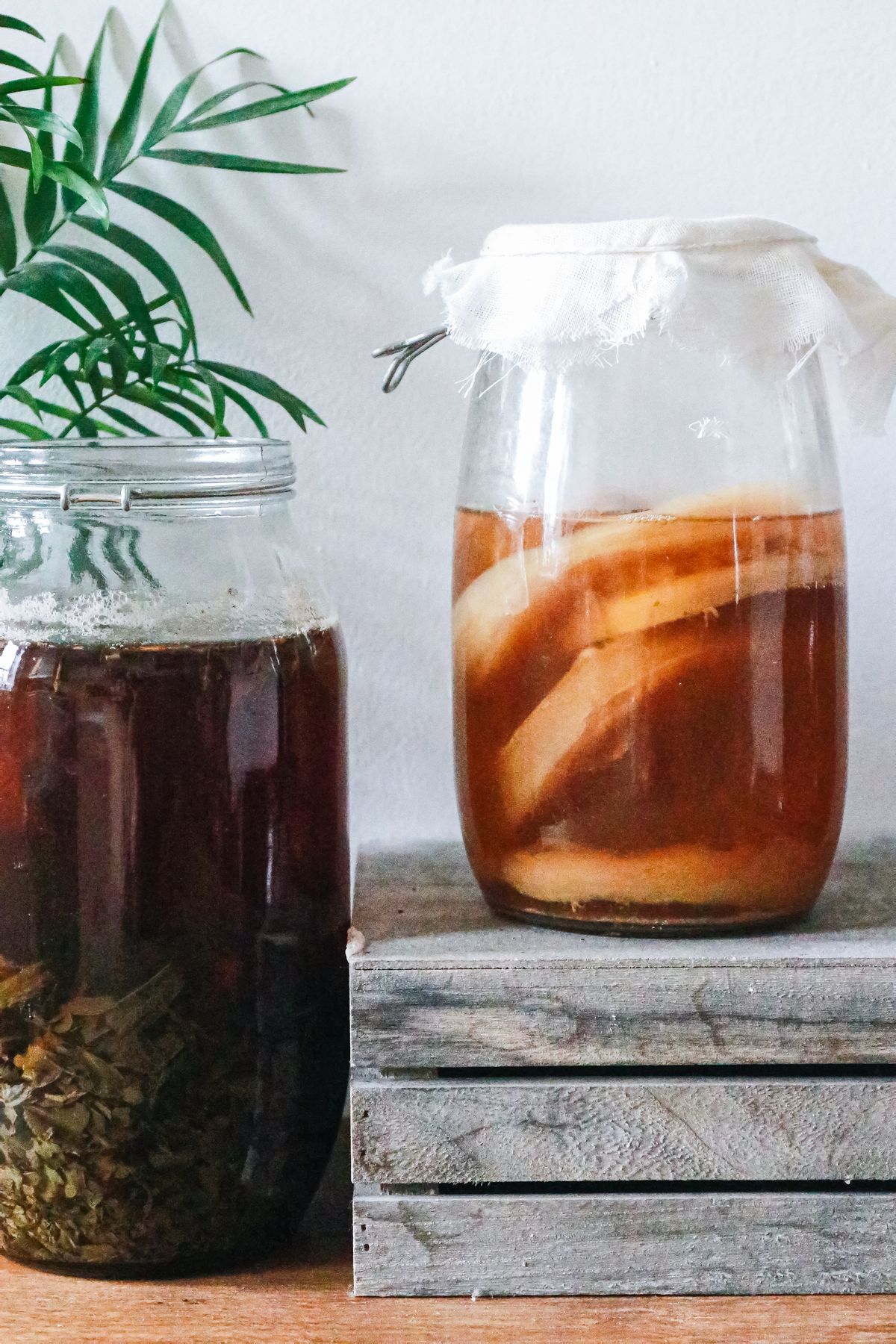
The culture in your jar eats sugar, makes acid, makes carbonation, and reproduces. It never stops. The sour taste, the fizz, the new rubbery disc floating on top of the liquid: all of it is evidence that the jar is working. That is what kombucha is. A living system in a glass container on your counter.
The bottle at the store went through a kill step. The culture that made the product was removed or destroyed so the bottle could sit in a warehouse, ride in a truck, and land on a shelf in July without crossing the alcohol line. What you pour out of that bottle is tea, sugar, acid, and carbonation from a machine. What you pour out of your jar is a living culture that has been eating and growing for two weeks.
That is the difference. Not cheaper. Not homemade. Alive.
Nobody warns you about what happens next. It becomes a hobby. Everybody has a closet or a counter or a shelf where the jar can sit and do its thing. All your friends think it is the most interesting object in your kitchen. You start making flavors. You hand somebody a bottle of ginger-lemon that hisses when they open it and they look at you like you pulled off a magic trick. Three months in, you have more cultures than you need and you are handing them to neighbors in mason jars with a one-page card.
Now. What it costs, because a real number beats an adjective.
- Eight tea bags: about sixty-five cents. Black tea, from a box of a hundred that cost $6.50. Green tea works too. Anything from the Camellia sinensis plant.
- One cup of plain white sugar: about thirty cents. The culture eats it. This is its fuel, not your sugar intake. By the time fermentation is done, the culture has consumed most of it.
- Filtered water: from your tap. If your water is chlorinated, boil it and let it cool. Chlorine kills the culture.
- The SCOBY: free after the first batch. It reproduces every single time. Your first one costs somewhere between nothing and fifteen dollars, depending on how you get it. After that, you have more cultures than you need for the rest of your life.
Total per gallon: between ninety-five cents and a dollar sixty, depending on your tea and your sugar. A gallon fills eight sixteen-ounce bottles. That is twenty cents a bottle at the high end.
Now watch what that does to the annual number.
At the store, a few bottles a week adds up to over a thousand dollars a year. At home, the same amount costs under $150. For the whole year. Tea and sugar. The startup gear, a gallon jar, some bottles, and a culture, runs about $50 and you buy it once.
Your first three gallons pay for the equipment. Everything after that costs you tea and sugar.
The process is this. Brew sweet tea. Let it cool. Pour it into a jar with your culture and some finished kombucha from the last batch. Cover the jar with cloth. Walk away for seven to fourteen days.
You do not stir it. You do not check on it. You do not adjust anything. The culture eats the sugar, makes acid, makes carbonation, drops the pH from neutral to somewhere between 2.5 and 3.5, and builds a new rubbery disc on top of the liquid that is a brand-new SCOBY you can give to somebody else or keep.
When it tastes the way you like it, you bottle it. That is the entire manufacturing process.
Still with me? Good. Because here is where I have to say four things you will not hear from anyone trying to sell you on making kombucha, and I am going to say all four before I ask you for your email or your money.
Four things are different about this. I owe you all of them up front.
One. You need a living culture to start.
Brine ferments start from nothing. The bacteria are already on the vegetable. Sourdough starts from flour and water. Kombucha is different. You need a SCOBY, a living symbiotic culture of bacteria and yeast, and you cannot make one out of thin air.
Three paths. Somebody who brews gives you one, because the culture reproduces every batch and every brewer has extras. You buy one online for $10 to $25, which comes with strong starter tea and is ready to go the day it arrives. Or you grow one yourself from a bottle of raw, unpasteurized store-bought kombucha for about four dollars and two to four weeks of patience.
The course teaches all three. The third is the cheapest and the slowest. Most people start there.
Two. You need sugar. A full cup of it.
A cup of plain white sugar goes into every gallon. That sentence makes people flinch, and it should, because nobody explains what happens to it.
The culture eats the sugar. That is the whole point. By the time your kombucha is finished, the SCOBY has consumed most of what you put in. A standard fermentation leaves two to six grams of sugar per eight-ounce serving. For comparison, eight ounces of orange juice has twenty-four grams. A can of cola has thirty-nine. The store bottles often add fruit juice after fermentation, which puts the sugar back in. Yours does not, unless you choose to.
Three. It takes two weeks, not five days.
First fermentation runs seven to fourteen days depending on your kitchen temperature and how sour you like it. If you want fizz, you do a second fermentation in sealed bottles for two to four more days. You are not drinking this on Friday. You are drinking it in about two weeks. But once you have a rotation going, you never run out, because the culture never stops.
Four. The alcohol question, and I will not hide it.
Home kombucha produces alcohol. Typically between 0.5% and 2.5% ABV. That is the honest range. The federal line for non-alcoholic is 0.5%, and your kitchen is not a laboratory. Commercial producers invest in culture selection, temperature control, dilution, and lab testing to stay compliant. Your kitchen counter cannot do that.
You should assume your kombucha exceeds 0.5%. That puts it roughly in the range of a ripe banana to a very light beer. If that matters to you, the course teaches how to keep it lower: ferment longer, ferment cooler, use strong starter tea. If you want it higher, you are making hard kombucha and the rules are different.
I am telling you all four before you spend a dollar or a day. That is how this project works.
Now. Having said all of that.
Millions of people brew kombucha at home. It is not hard. It does not require equipment beyond a jar, a pot, and some bottles. The barrier looks higher than it is from the outside, and the reason it looks high is the same reason brine looked hard to me: too many strangers on the internet arguing about details that do not matter yet.
I'll tell you exactly what went into the bottle. What it does for you is between you and your body.
Onward. Because the part that hooks people is not the first fermentation.
Second fermentation is where you stop following a recipe and start making signatures
Your first fermentation gives you plain kombucha. Tart, lightly fizzy, a little sweet. Good on its own, and some people stop there.
But the second ferment is where this becomes the most fun thing in your kitchen.
You pour your finished kombucha into sealed bottles. You drop something in. Sliced ginger. A few raspberries. Mango chunks. Blueberries and lavender. A strip of lemon peel and a pinch of cayenne. Whatever was in the fruit bowl that morning.
Seal the bottle. Leave it on the counter for two to four days. The residual yeast eats the fruit sugar in a closed system and the carbonation builds naturally, because the CO2 has nowhere to go.
You open the bottle and it hisses. That sound is yours. Nobody pumped it in with a machine.
You choose the flavor
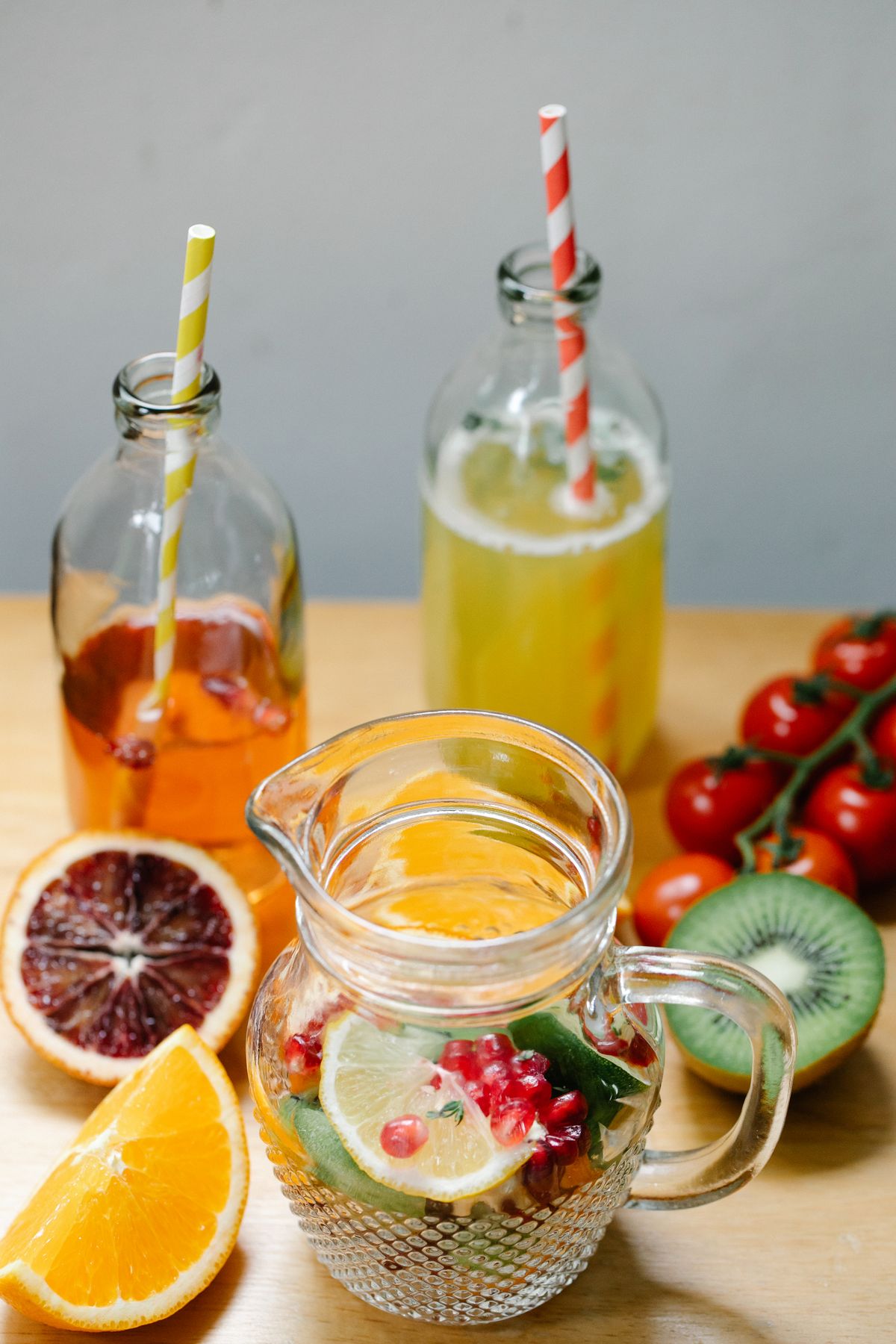
Ginger and lemon. Blueberry and lavender. Mango and habanero. Raspberry and mint. The fruit goes in the bottle, the remaining sugar ferments against it for two to four days, and you taste your way to a recipe nobody else has.
You choose the fizz
More sugar means more carbonation. Mango makes the bottle explosive. Herbs make it gentle. Once you understand the lever, you dial it. The course teaches how to manage pressure so nothing goes wrong, including the plastic-bottle trick that tells you when the glass ones are ready.
You choose the color
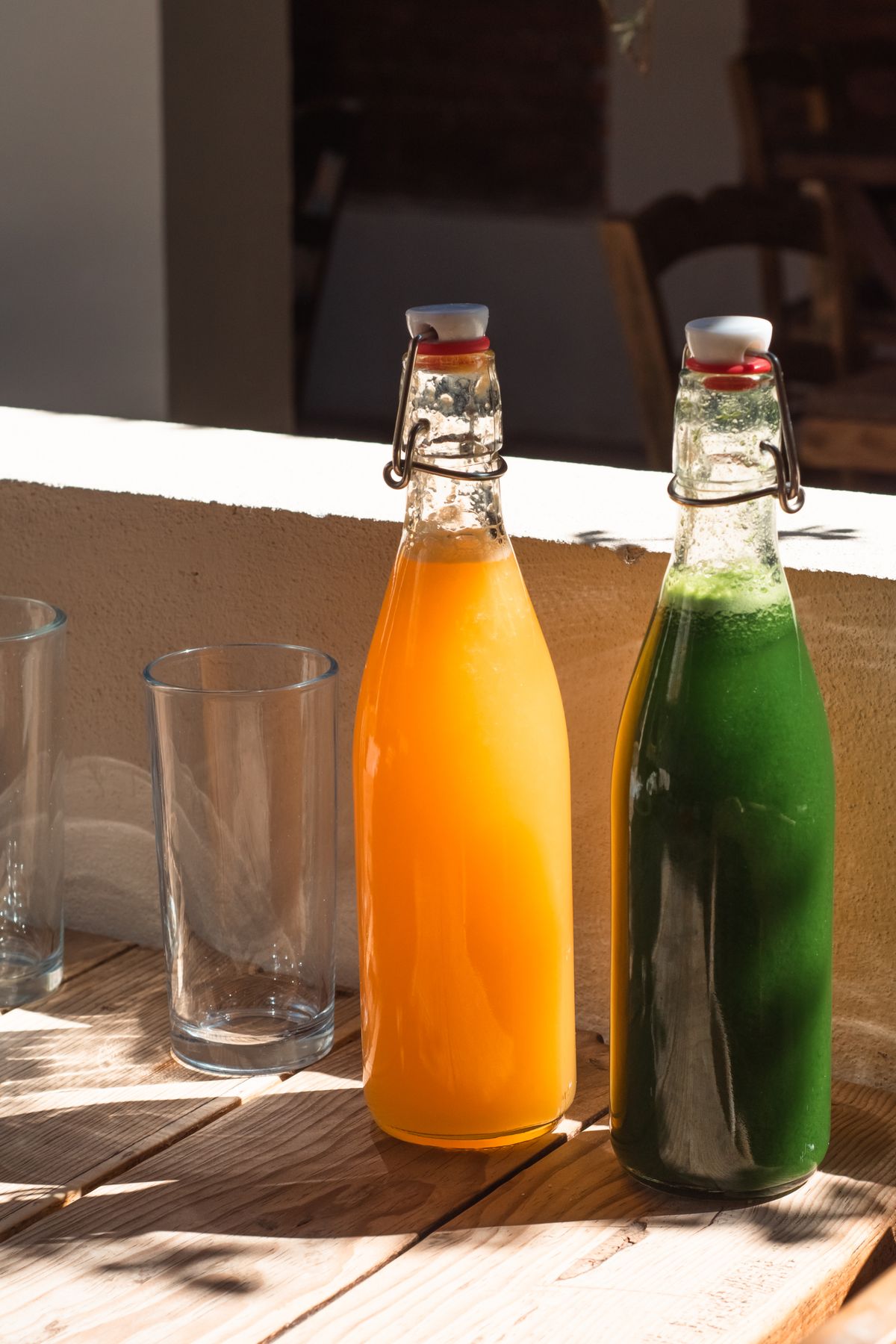
Beet turns it magenta. Turmeric turns it gold. Blueberry turns it deep purple. Butterfly pea flower turns it blue and shifts to pink when you add citrus. Your fridge door starts looking like a paint rack, and every bottle is a different week.
You get to hand one to somebody
Same thing that happens on the brine side. Somebody opens your fridge, sees a row of colored bottles, picks one up and asks what it is. You hand it to them. They taste it. They ask for the recipe. That is how every brewer started.
The colors are the most photogenic thing in your kitchen. That is not a marketing observation. That is a fact about fruit and fermentation. Mango kombucha is the color of a sunset. Beet kombucha is the color of a garnet. Ginger lime is pale gold with a bite that makes your whole face move.
This is the part where it stops being a recipe and starts being yours.
Seven sessions. About two and a half hours. You brew your first gallon the night you start.
Each of these is filmed, not written. You watch, you do, you drink in about two weeks. Here is what is inside, and I wrote each line to tease rather than summarize, because the detail is the product.
- Why the culture in your store bottle is probably not what made it. The SCOBY, the pellicle, and the starter liquid, which three you actually need and which one everybody overvalues.
- The $4 path to a living culture nobody sells you. Growing a SCOBY from a raw bottle, which saves you $20 and teaches you more than buying one ever could.
- The one ratio that decides whether your first batch tastes right or tastes like vinegar. Tea, sugar, starter. Get the ratio wrong and the culture either starves or drowns. Get it right and it runs itself.
- Why your kitchen temperature changes everything and your thermometer does not matter. The five-degree window that doubles your fermentation speed, and why the mold risk everybody worries about is a temperature problem, not a cleanliness problem.
- The fruit that makes your bottle explode and the one that makes it flat. Mango is a carbonation bomb. Herbs are gentle. The chart in session four tells you which is which before you find out the hard way.
- The plastic-bottle trick that tells you when your glass bottles are ready. One squeeze. That is the entire pressure-testing method, and it saves you from opening a geyser over your counter.
- The one thing you cannot see, smell, or taste that decides whether you can sell this. The alcohol threshold, how to manage it, and why kombucha is the one ferment where "sell at markets" hits a regulatory wall that pickles and bread never touch.
Each session ends with you doing something. Not reading about it. Brewing, bottling, tasting, or checking. The second session ends with sweet tea cooling on your counter and a culture going in.
The Living Brew
Seven filmed sessions. About two and a half hours of video. You have sweet tea cooling on your counter by the end of the first night.
- The SCOBY, from scratch. Three paths to a living culture, including the $4 bottle method. You do not need to buy anything from me to start.
- Your first gallon, gram for gram. The exact tea, the exact sugar, the exact ratio, the exact temperature range. No ambiguity and no opinions from strangers.
- Second fermentation and flavoring. Sealed bottles, fruit additions, carbonation management. The chart that tells you which fruit makes pressure and which one makes flavor.
- When something looks wrong. Mold, kahm yeast, too vinegary, too sweet, flat. Real photographs of each, what they mean, and which ones go in the bin.
- The alcohol question, answered. How to test, how to keep it low, where the regulatory line is, and what happens if you cross it.
- Continuous brew. The set-it-and-pour-it method for when you drink it every day and a weekly batch cycle stops making sense.
- The SCOBY hotel. How to store your extras, how to keep them alive for months, and why your backup cultures are the most generous thing you will ever hand a friend.
- Bonus: the selling module. The regulatory path, the alcohol threshold, permits by state, and the honest answer about what makes kombucha harder to sell than pickles or bread.
$67 once
One payment. Not a subscription. Lifetime access. When I re-film a session, you get it.
Instant access. Nothing ships. If you have a pot and a jar you can start tonight.
The guarantee, said plainly
Brew one gallon using the ratios from session two. If it does not work, email me and tell me what happened. I will refund you in full, and then I will help you diagnose the batch anyway, because a failed first batch is almost always one of three things and I would rather you ended up with kombucha than with your money back.
Sixty days. No form, no hoops.
Why $67 and not $19?
Fair question, and you should make me explain it.
A $19 course is a recipe collection. Nothing wrong with that. If a recipe collection is what you want, go buy the cheaper one with my blessing. There are good ones.
But a recipe does not teach you what happens inside the jar. It does not explain why the culture keeps fermenting after you bottle it, why your kitchen temperature is the single biggest variable, why mold shows up when it is cold and not when it is warm, or why the plastic-bottle trick works. A recipe hands you steps. This course hands you the understanding underneath the steps, so when something looks wrong on day five you know whether to wait or to dump it.
A recipe also does not teach you the alcohol question. It does not walk you through the regulatory map. And it does not put the selling reality on the table before you plan a business around it.
Here is the arithmetic that convinced me. If you drink one bottle a day at the store, you spend about $25 a week. This course costs less than three weeks of bottles. After that, every bottle you make at home for twenty cents is twenty cents instead of five dollars. The math crosses over in about two and a half weeks.
I would rather sell you the skill one time than rent you the outcome forever.
If that already worked for you, do not read the rest of this page.
Get the course, $67
Five things stopping you. I have heard all five.
"Where do I even get a SCOBY?"
Three paths and the course teaches all of them. Get one from somebody who brews, because every brewer has extras. Buy one online for $10 to $25. Or grow one yourself from a raw, unpasteurized bottle of store kombucha for about four dollars and two to four weeks of patience. The third path is how most people start, and it works.
"I am not putting a cup of sugar into my body."
The culture eats it. That is the entire point. A finished kombucha has two to six grams of sugar per eight-ounce serving, depending on how long you let it go. Orange juice has twenty-four. The sugar is fuel for the fermentation, not an ingredient in your glass. If you want less, ferment it longer. The lever is yours.
"What if I grow mold?"
Mold happens, rarely, and the course shows you real photographs so you never have to guess. The one-question test: is it fuzzy? Fuzzy on top means mold. Flat and smooth means healthy growth. Mold is a temperature problem more than a cleanliness problem. Keep your jar above 70 degrees and use enough starter tea and the odds drop to nearly zero.
"Is this not basically making alcohol?"
In small amounts, yes. Typically 0.5% to 2.5% ABV at home. That puts it roughly in the range of a ripe banana to a very light beer. If you want it lower, ferment at the cooler end of the range and use strong starter tea. If you want it higher, that is a different course. The one thing I will not do is pretend the number is zero.
"I can learn this free on YouTube."
You can. You can also spend a month watching forty videos from forty strangers, half of whom contradict each other, absorb a dozen opinions about what kind of tea to use, and end up with so much information that you never brew a batch. Or you brew one using a guess and it turns to vinegar and you decide this is not for you. This course gets you to a finished bottle in two weeks with no guessing. The difference is not the information. It is the order and the confidence.
That is all five. If none of them are yours, the only thing between you and a jar of sweet tea on the counter tonight is this button.
Get the course, $67Do not buy this if
- You want a health cure. I do not sell one. The culture is alive. What it does for you is between you and your body.
- You want a replacement for alcohol. This is not a sobriety product. It is fermented tea, and it contains trace alcohol. If the alcohol question matters to you, read the honest answer above one more time.
- You want a hundred flavors on day one. This is the method, the science, and seven sessions. After that, the flavors are yours to invent.
- You will not brew the first batch. The walkthrough is free. Take that, keep your money, and come back when you have a jar on the counter.
Kombucha has a different path than pickles. I will tell you why before you plan around it.
On the brine side, selling at a farmers market is mostly a state cottage food question. Texas names fermented vegetables in its statute. Illinois allows them with a food safety plan. The barrier varies, but the path is walkable.
Kombucha is harder, and the reason is the alcohol.
Home kombucha routinely crosses the 0.5% ABV threshold during normal fermentation. At that line, the bottle becomes a regulated alcoholic beverage under federal law. That does not mean you cannot sell it. It means the path involves a licensed facility, regular ABV testing, strict temperature control, and potentially a federal TTB permit. Startup cost for a farmers market booth runs $500 to $2,000, significantly more than cottage food.
Most states exclude kombucha from cottage food laws. A few allow it with conditions. Three prohibit it outright. The answer depends on your state, your testing method, and whether you can keep your alcohol reliably below the line.
The course covers this honestly. Session seven walks you through the regulatory map and teaches you how to check your own state. No income promises, and no pretending the path is simpler than it is.
Nobody else in this category tells you the hard part first. That is how you know you can trust everything else on this page.
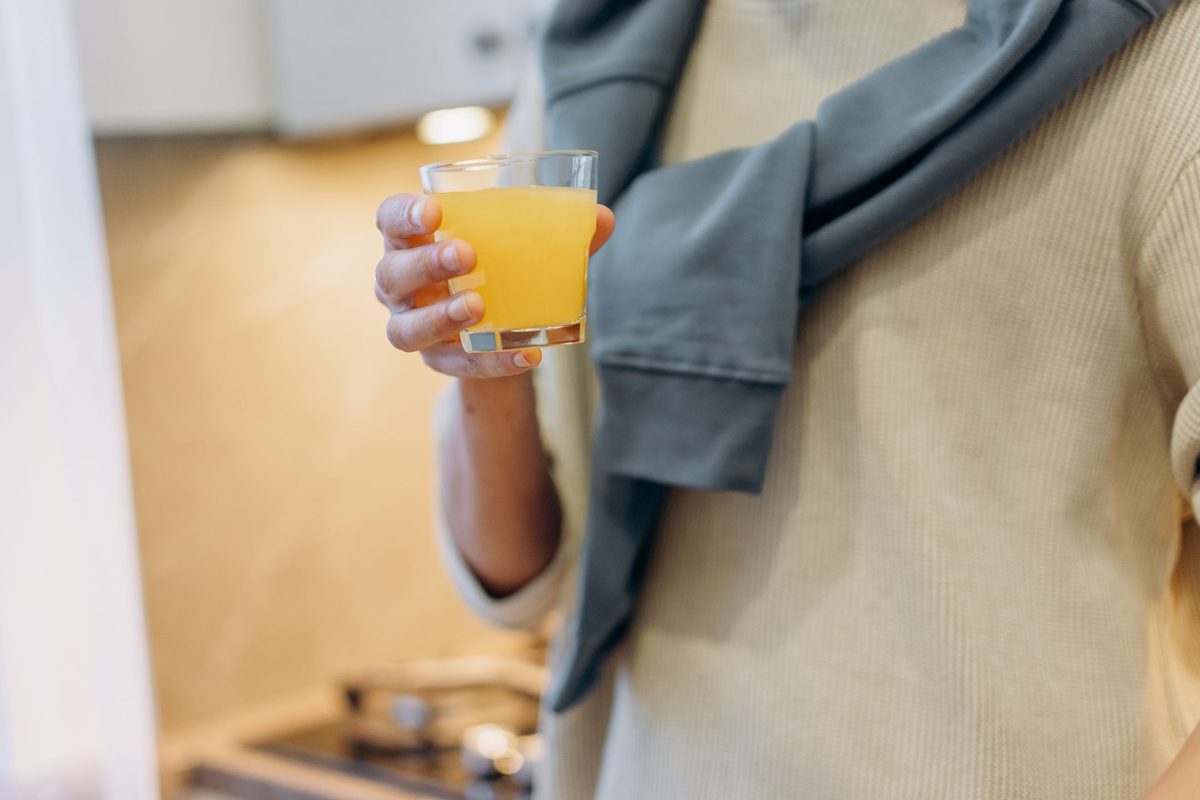
Both are real. You have been living the first one.
You close this page
Nothing bad happens. That is what makes it easy. The cart still gets pushed every week. Four bottles, same brand, same shelf. By this time next year you will have spent another year drinking the dead version and calling it kombucha. Another thousand dollars on sweetened tea somebody else made. And you will still not know what the living product actually tastes like.
You brew your first gallon tonight
Sweet tea cools on the counter. The culture goes in. You forget about the jar for a week. Day seven, you taste it with a straw, and something tart and clean and slightly fizzy hits your tongue. You bottle it with ginger and lemon. Two days later you crack a cap and it hisses. That sound is yours. Nobody made it for you.
You do not have to get it right. You have to get it moving.
Here is exactly what happens next, including the obvious parts.
Click the button. It opens Gumroad. The price says $67 and there is no other price, no bundle upsell, no second screen asking for more money.
Enter your email and your card. You get access on the same screen, not in twenty-four hours.
Inside, go to session one first. Do not browse. Session one is fifteen minutes and it ends with you understanding what a SCOBY actually is and which of the three paths to getting one makes sense for you. Session two puts sweet tea on your counter.
Two weeks from tonight you are going to crack a bottle at the counter and hear it hiss.
The whole kitchen smells like ginger and lemon. The carbonation is yours. The color is whatever fruit you dropped in. The cost was about a dollar, and the five-dollar version is still sitting on a shelf at the store, waiting for someone who does not know what you now know.
You came to this page as somebody who buys the bottle. You leave as the person who makes it.
Tea, sugar, water, a culture. That is the whole input list. Everything after that, the culture handles.
Get the course, $67One payment. Lifetime access. Sixty days to change your mind.

Kevin
The Bread & Brine Society
Toledo steelworker's kid. Combat veteran. I coach capital gains deferrals for celebrities, pro athletes, politicians, business owners. I am not hurting for work. This is not that.
A genetic scientist with nearly $200 million in his own research sat me down years ago and wrecked my whole understanding of food. Beta-glucans pasteurized completely out of the diet. Glycation from ingredients the body was never built to process. A food pyramid built on guidance the meat industry lobbied to water down in 1977, and it stood for 49 years before somebody flipped it upside down this January. He looked at me and said: if that can change, what else should you be looking at?
I have not stopped looking. I turn boxes around now. Every one of them. The nutritional value is depleted but the habit is still there. Breakfast, lunch, dinner. We are overeating dead food and paying more for it every year. I turned the kombucha bottle around and it was not what I thought it was. I had been an advocate. Bought it for years. Then I found out they pulled it off the shelves in 2010 because it kept fermenting. Put it back pasteurized. Dead. Same label, same price. That pissed me off. Tea, sugar, a culture, and seven days on the counter.
Teresa and I make everything ourselves now. It changed things we did not expect it to change. I will tell you exactly what is in the jar. What it does for you is between you and your body. But I will say this: we did not expect it, and we are not going back.
P.S. The SCOBY multiplies. Every batch grows a new one. Within three months you have more cultures than you will ever use, and your friends start asking for one. You will hand it over in a jar with a cup of starter tea and a one-page card, and that friend will hand one to their friend, and that is how this has spread for thousands of years. Not through a store. Through a kitchen.
P.P.S. If you want to see whether any of this is real before you pay me anything, the first-brew walkthrough is free and it is at the bottom of this page. No purchase and no course required. I would rather you tested me first.
Questions I get before people buy
What exactly do I get, and when?
Seven filmed sessions, about two and a half hours total. Access lands on the screen the second you pay. Nothing ships and there is nothing to wait for.
Do I need special equipment?
A one-gallon wide-mouth glass jar, a pot to boil water, a breathable cloth cover, and some swing-top or screw-cap bottles for the second fermentation. Total startup gear runs $35 to $75. You can cut that by reusing commercial kombucha bottles, which are free and already pressure-rated.
How fast do I actually drink something?
First fermentation runs seven to fourteen days. Second fermentation adds two to four days if you want fizz and flavor. Call it about two weeks from the day you start to the day you crack the first bottle.
What tea do I use?
Any true tea from the Camellia sinensis plant: black, green, white, or oolong. Black is the most reliable and the best for beginners. Never herbal tea alone. The culture needs the nitrogen, caffeine, and polyphenols that only come from real tea. Herbal blends at 10 to 25 percent are fine for flavor, but the base should be real tea.
Is there an upsell after I pay?
No. One price, one product, one payment. The page you land on after checkout is the course.
Can I really make kombucha if I have never fermented anything?
The course is built for that person. If you can boil water and pour tea, you are qualified. The culture does the actual work. Your job is to feed it and leave it alone.
What about the alcohol? Should I be worried?
Home kombucha typically contains 0.5% to 2.5% ABV. That is real and you should know it. For personal use at home, the same federal exemption that covers home beer and wine making covers home kombucha. If you want to sell it, the rules are different and the course covers them in session seven.
Not buying today? Brew your first batch free.
The first-brew walkthrough: where to get a SCOBY for four dollars, the exact ratios, the exact timing, and what to do when something looks wrong. No purchase required.
No spam, nothing to pay. Unsubscribe anytime.
P.S. Same filmed format as the brine course. Same voice, same promise: you will have something fermenting on your counter by the end of the first session. See The Mineral Brine System.
The bottle is the doorway, not the whole house
There is a brine side, a bread side, and a room full of people putting food up the old way because it turns out that was never a bad idea. You get in by making the thing, not by knowing the right person.